
Vultr Review 2026: Is It Worth It? Deploy 24/7 Automation Bots and Scrapers for Less Than the Cost of a Coffee

 Tram cong nghe AI
Get Vultr Special Offer Here

Get Vultr Special Offer Here
Quick Summary
For marketers and automated content creators, waiting on slow rendering engines or local computers running 24/7 is a fast track to burnt-out hardware and missed viral trends. Vultr delivers enterprise-grade virtual private servers (VPS) that let you host social media automation tools, mass-scraping bots, or dynamic web apps across 32+ global locations with jaw-dropping speed. It is the ultimate playground for growth hackers who need raw power without the confusing, bloated enterprise pricing of AWS.
Pros:
- Blazing NVMe Performance: High-frequency tiers run on 3GHz+ AMD EPYC processors, resulting in fast script executions and zero-lag processing for background tasks.
- 1-Click App Marketplace: Skip the complex terminal commands. Instantly deploy Docker, WordPress, or full developer stacks with a single click.
- Unmatched Price Predictability: Hourly billing with transparent monthly caps means you never have to guess what your infrastructure invoice will look like.
Cons:
- Strictly Self-Managed: There are no handheld customer support lines. If your custom script breaks the OS configuration, you have to debug it yourself via support tickets.
- Aggressive Fraud / Security Filters: Their automated anti-fraud account system is highly sensitive, which can sometimes frustrate legitimate users during initial sign-up.
Real-World Case Study – “What I built with it”
I needed a way to scale up a faceless TikTok strategy across multiple accounts without frying my laptop or babysitting manual video uploads daily.
Using Vultr, I spun up a High-Performance Ubuntu cloud instance and installed an automated Python script coupled with a headless video-generation tool. The setup scraped daily trending finance data, compiled it into 60-second vertical videos, and scheduled automated uploads across 3 separate TikTok channels around the clock—all while my main computer was turned off.

Within exactly 9 days of execution, one of the automated accounts caught the algorithm’s favor. A video breaking down sudden stock movements went viral, clocking over 185,000 views and driving thousands of clicks to my financial newsletter landing page. Because the server features premium upstream peering, the script consistently executed data fetches and video renders within seconds, completely eliminating the render crashes I struggled with when trying to test this locally.
Pricing & Smart Hacks
Vultr scales with your needs, from simple testing sandboxes to heavy data pipelines:
- Cloud Compute (Regular): Starts at $3.50/month for full IPv4 access. Ideal for lightweight scrapers or basic cron-job automation bots.
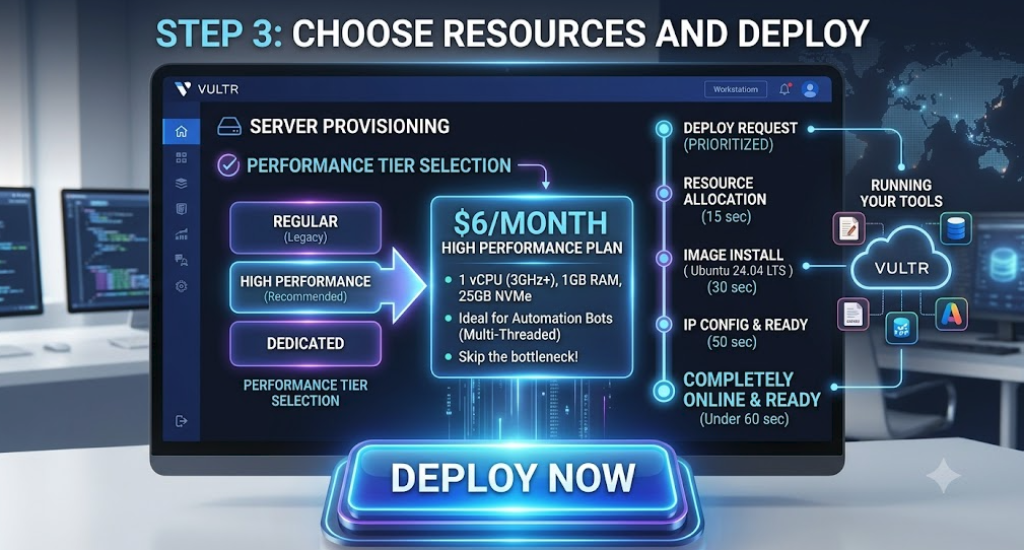
- High Performance (Recommended for Beginners): At $6.00/month, you get 1 vCPU, 1 GB RAM, and ultra-fast NVMe storage. This is the absolute sweet spot for running multi-threaded automation scripts or high-traffic landing pages safely without performance hitches.
- The Free/Cheap Version Trap: Vultr promotes an entry tier at $2.50/month, but it is IPv6-only. Unless your application only interacts with modern, native IPv6 protocols, most legacy web APIs and standard bots require the $3.50/month IPv4 plan to run seamlessly.
Cost-Saving Hack: Vultr operates strictly on a pay-as-you-go model. If you are running a heavy video rendering job or a massive scraping operation that only takes 3 hours to complete, destroy the instance immediately afterward. You will only be billed for those 3 exact hours of active server runtime, saving you up to 95% compared to paying for a rigid monthly subscription elsewhere.
Quick 3-Step Startup Guide
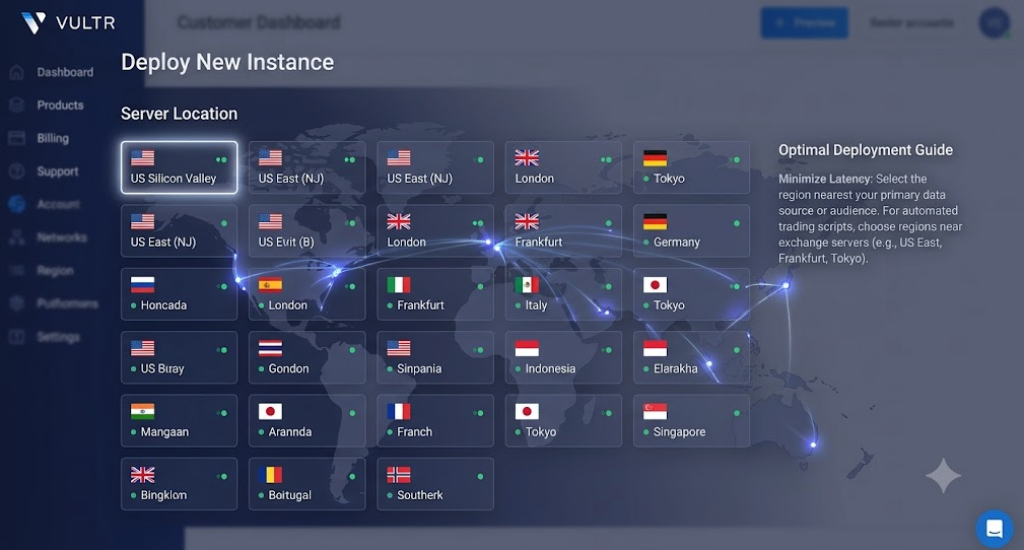
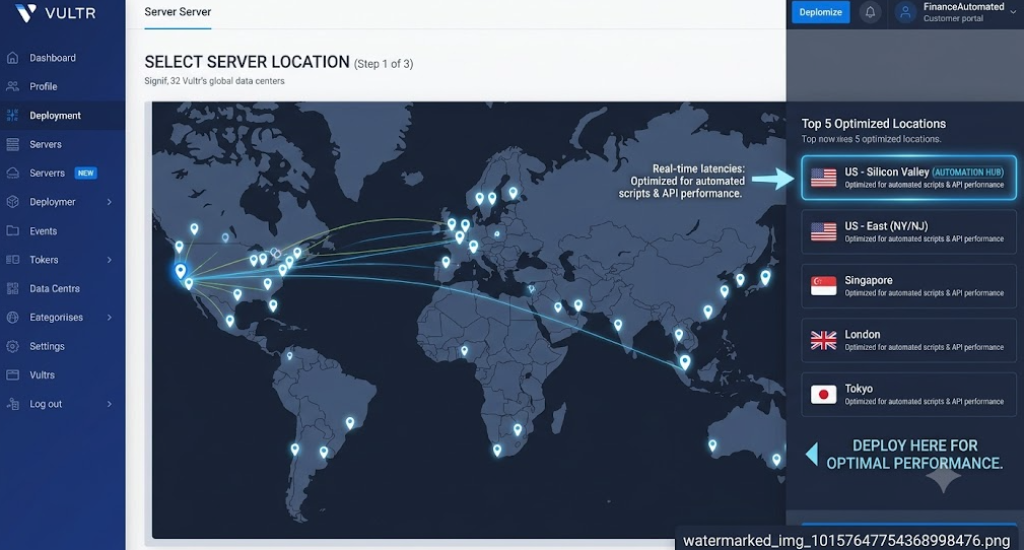
Step 1: Select Your Server Location
Log in to your dashboard and choose from 32 global data centers. For optimal script performance, choose the data center closest to the target platform’s API servers (e.g., US Silicon Valley or US East for fastest communication with standard tech platforms).
Step 2: Pick Your Image or 1-Click App
Choose your operating system (like Ubuntu or CentOS) or navigate straight to the Marketplace tab. From here, select pre-configured environments like Docker, Plesk, or cPanel to completely skip the server configuration learning curve.
Step 3: Choose Resources and Deploy
Select your performance tier (the $6/month High Performance plan handles automation tasks perfectly) and hit “Deploy Now.” Your virtual server will spin up and be completely online, ready for your tools, in under 60 seconds.
Get Vultr Special Offer Here

